





Statement by His Excellency President Cyril Ramaphosa during a session on Inclusive Global Governance and Strengthening Multilateralism, 18th BRICS Leaders' Summit, New Delhi, India
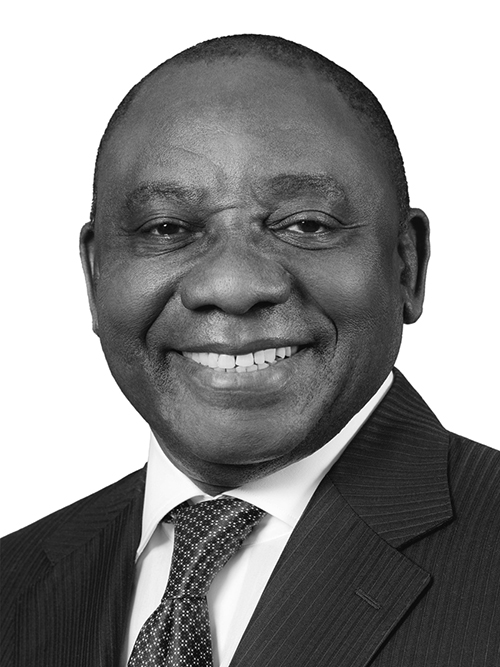
Your Excellency, Prime Minister Narendra Modi,
Fellow BRICS Leaders,
Honourable Ministers,
Excellencies,
Ladies and gentlemen,
I wish to extend my appreciation to you, Prime Minister Modi, for convening this important discussion.
Our sincere thanks for your gracious hospitality here in New Delhi.
We meet at a time of profound challenge and change in global affairs.
The United Nations has entered its eighty-first year, having endured the Cold War and many other challenges while largely upholding its mandate to maintain global peace and security.
Over many decades, multilateralism has shown itself to be effective in organising global relations, advancing human rights and promoting development.
Yet, the relevance of the United Nations and the durability of multilateralism are now threatened by overt violations of the UN Charter and the resort to war to settle differences between Member States.
Multilateral institutions and rules are being ignored and subverted.
This is what makes BRICS an important organisation.
The greatness of BRICS lies not in the fact that we are the same, but precisely in the fact that we are different.
We represent different continents, civilisations, political traditions and stages of development.
Yet we have discovered that our diversity need not divide us. We can cooperate without surrendering our sovereignty, trade without demanding political conformity and pursue our national interests while advancing the interests of humanity.
BRICS represents a world in which no nation needs to choose between East and West, North and South. It represents a world with many centres of power, but a common commitment to development, dignity and a more equitable international order.
At the BRICS Summit in Yekaterinburg in 2009, leaders committed to multilateral diplomacy with the United Nations at its centre and to a just multipolar order based on international law and equality.
It is up to BRICS to defend and strengthen that multilateral order.
South Africa advocates a predictable global system based on international law, with the UN Charter at its centre.
An order founded on the sovereign equality of states, territorial integrity and political independence benefits all nations, large and small.
It prohibits intervention in the internal affairs of other states and the use of force not consistent with Article 51 of the UN Charter or authorised by the Security Council.
It obliges states to settle disputes peacefully and to respect human rights and self-determination.
To give strength to the law, there must be accountability for atrocities: for the ongoing genocide against the Palestinians, for the crimes committed against the people of Sudan and for the illegal war against Iran.
We must exert pressure and expose violations whenever, and by whomever, they are committed.
International law cannot be applied selectively: the same principles must apply to all states and the same protections must apply to all peoples.
It is for this reason that South Africa and other Member States have turned to bodies like the International Court of Justice and the International Criminal Court to seek justice for the people of Palestine.
We cannot allow the United Nations to disappear into irrelevance.
At the same time, we must acknowledge that the UN and other global institutions do not reflect the realities of today and are ill-equipped for the world of tomorrow.
Africa accounts for 54 Member States of the United Nations and nearly one-fifth of humanity, yet remains without permanent representation on the Security Council. This is neither just nor sustainable.
South Africa reiterates its call for comprehensive Security Council reform that makes the Council more representative, accountable, transparent and effective.
South Africa supports strengthening the wider UN system, including through the UN80 Initiative and a renewed United Nations focused on peace and security, human rights and humanitarian affairs, and socio-economic development.
The challenges the world faces today require more inclusive and more effective multilateralism.
BRICS can contribute in four ways.
First, BRICS must remain a united voice for reform. It must advocate for a UN system that reflects current realities and in which all regions are effectively represented.
Second, BRICS should demonstrate that multilateral cooperation delivers practical results.
Through the New Development Bank and other areas of cooperation, we can help advance infrastructure development, sustainable growth, food security, health, industrialisation and climate resilience.
Third, BRICS should help shape approaches to global governance that are fairer, more accountable and development-oriented.
Fourth, BRICS is a bridge across geopolitical divides. In a fragmented world, dialogue matters more than confrontation.
We should ensure that countries with developing economies have a meaningful voice in global decision-making and that power remains constrained by law.
We must strengthen multilateralism through reform and action.
We must uphold international law and allow no one to act with impunity.
And we must ensure that the voices of Africa and the Global South are fully reflected in shaping the future international order.
I thank you.
.png)

.png)

