





Remarks by Deputy Minister in The Presidency, Kenny Morolong, on the occasion of the TikTok Safer Internet Summit, Nairobi, Kenya
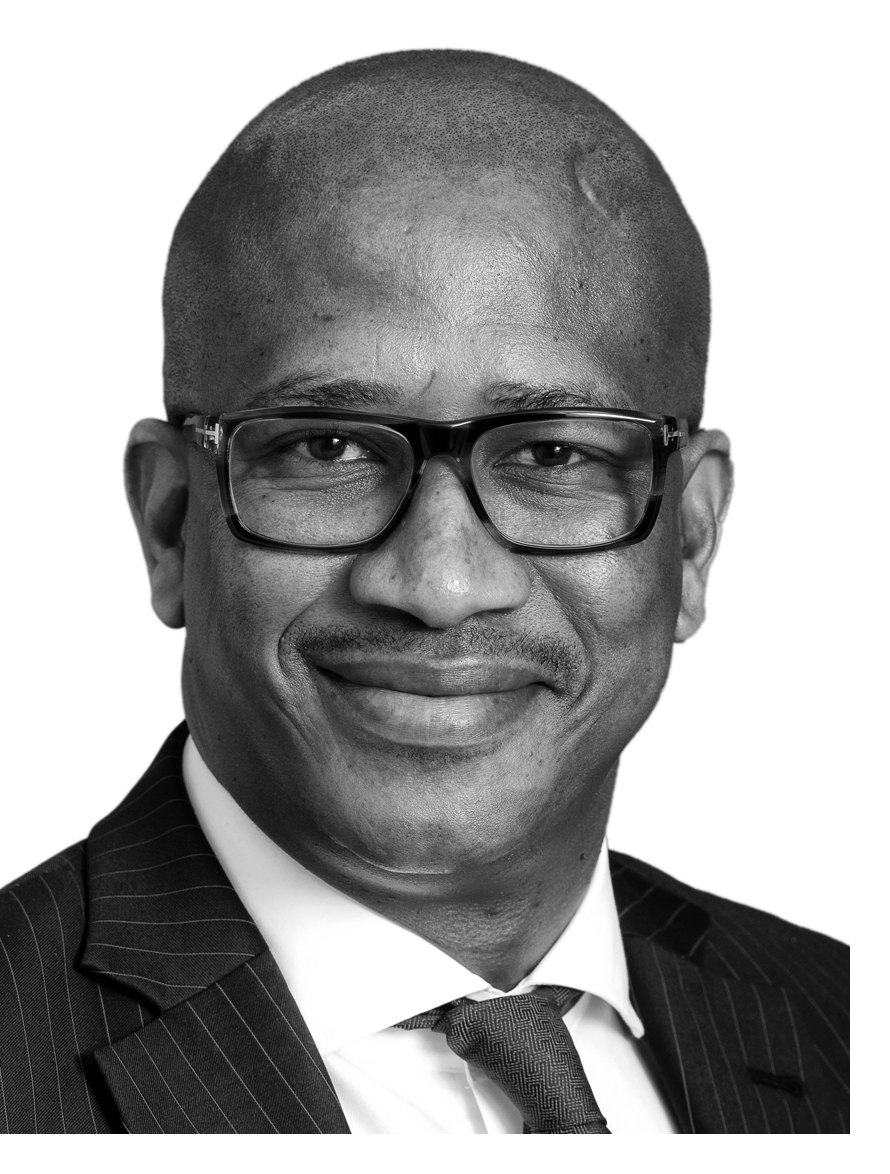
Addressing a gathering of journalists and Government communicators, on the eve of our State of the Nation Address; I had occasion to say:
“Our 30-year-old Constitution gave us the framework. Our 25-year-old democratic local government brought governance closer to the people. Now, as we prepare for another round of local government elections, we must ensure that our media landscape supports informed participation and strengthens the bonds of community.”
I am repeating these words to you because, I am hopeful that all of us as Africans, do realise how far we come, when the South African story is told. I firmly insist that, we cannot sufficiently tell our story – as South Africans - without counting the sacrifices of the peoples of Africa, in procuring our freedom.
I repeat this here to tell you a story that because of these heroic sacrifices, South Africa is today celebrating the milestones.
His Excellency, Ambassador Philip Thigo;
Hon. Cabinet Secretary, William Kabogo Gitau;
His Excellency, South African Acting High Commissioner to Kenya;
Executives and Stakeholders of TikTok;
Distinguished guests;
Content Creators;
Digital Safety Experts;
Ladies and gentlemen.
KARIBUNI!
We are pleased to be in Nairobi this week, reinforcing the strong partnership between South Africa and Kenya.
By attending TikTok’s Safer Internet today, we look forward to collaborating on advancing responsible AI governance, enhancing content transparency and strengthening digital safety measures to ensure integrity in AI systems and secure online environments for all users across the continent, including South Africa.
In his work Nexus, Yuval Harari observes:
“civilisations are born from the marriage of bureaucracy and mythology. The computer-based network is a new type of bureaucracy that is far more powerful and relentless than any human-based bureaucracy we’ve seen before.”
For centuries, societies were organised through visible bureaucracies: governments, institutions, administrations.
These were slow, human and limited by geography.
However, today humanity has created a new form of bureaucracy: the global digital network.
Algorithms that shape how billions of people receive and consume information every single day power this bureaucracy.
Social media platforms — including TikTok — are now part of this new digital bureaucracy.
They organise attention, distribute narratives, amplify voices and influence how societies understand or perceive the truth, authority and reality itself.
This therefore this makes information integrity one of the defining governance challenges of the 21st century.
Programme Director,
While we acknowledge how digital networks can spread knowledge, creativity and opportunity, we must accept that they also spread something far more dangerous: misinformation, disinformation and malinformation.
These three forms of harmful information have different origins but the same destructive impact.
Together, they undermine trust in institutions, polarise communities and threaten democratic stability.
Because digital networks operate faster and further than any previous communication system, these harms “are far more powerful and relentless than any human” societies has eever experienced before.
Ladies and gentlemen,
South Africa understands the importance of responsible communication in a democracy.
Our Government Communication and Information System has adopted the National Communication Strategy Framework 2025–2030, which emphasises coordinated, credible and citizen-centred communication across all spheres of government.
For its part, the South African government, through the National Communication Strategy Framework recognises that communication is not simply about messaging.
It is about building trust between the state and the people.
It stresses the importance of accurate, timely and proactive information so that citizens are empowered to participate meaningfully in their own development.
If we accept this to be true then we should accept that information integrity is not merely a technical issue.
It is a development issue.
It is a governance issue.
It is a democratic issue.
Ladies and gentlemen,
For our purposes in Southern Africa, the SADC Protocol on Communications, calls on all member states to develop efficient, integrated and coordinated communications systems that support economic growth and social development across the region.
The protocol recognises that communications infrastructure and services are strategic assets that must serve the collective interests of societies and strengthen regional cooperation.
Today, however, we must acknowledge that the communications environment envisioned in the 1990s has transformed dramatically.
The most powerful communication networks in the world are no longer only national broadcasters or telecommunications systems.
They are global digital platforms that connect billions and shape public discourse.
These platforms function - whether intentionally or not - as the new bureaucracies of information.
This point, underscores the importance of TikTok Safer Internet Summit.
I think that by mere convening of this summit, the organisers are making an emphatic and a bigger point that the responsibility for a safer digital environment cannot fall on governments alone.
TikTok has become one of the most influential cultural and communication platforms in the world.
It has unlocked creativity, empowered young voices and transformed the way information travels across societies.
However, influence carries responsibility.
With billions of users - many of whom are young - the platform sits at the centre of the global information ecosystem.
That means TikTok is not just a platform for entertainment.
It is also part of the digital bureaucracy that shapes public consciousness.
\
This reality calls for proactive mechanisms that discourage and disrupt the spread of harmful information.
Programme Director,
Let me suggest three areas where platforms like TikTok can lead global innovation.
First, responsible use of Algorithm.
In that regard, Aalgorithms should not only optimise engagement.
They should also actively identify and reduce the amplification of demonstrably false or harmful content.
The architecture of digital networks must reward credible information rather than sensational falsehoods.
Second, information transparency.
Users must understand how information reaches them.
Greater transparency around recommendation systems, content moderation and information verification can help rebuild public trust in digital platforms.
Third, digital literacy partnerships.
Platforms must work closely with governments, educators and civil society to equip citizens — especially young people — with the tools to recognise misinformation and verify information sources.
In this regard, we stand ready to partner with TikTok to deliver on the digital literacy programmes across the country.
In an era where every citizen carries a publishing platform in his or her pocket, digital literacy has become as essential as traditional literacy.
We also are pleased that as TikTok you are committing to work closely with content creators to properly monetise their content.
Ladies and gentlemen,
This is not a call for censorship.
It is a call for responsible stewardship of the digital public sphere.
The challenge before us is to ensure that the new bureaucracy of computer-based networks serves humanity rather than destabilising it.
If civilisations are indeed born from the marriage of bureaucracy and mythology, then the narratives circulating within our digital networks will help determine the future of our societies.
Will these networks amplify truth or falsehood?
Will they strengthen democracy or weaken it?
Will they unite communities or divide them?
The answer to these questions depends on the choices we make today.
Governments must create enabling policy environments.
Platforms must innovate responsibly.
Civil society must hold all of us accountable.
Citizens must engage critically with the information they produce and consume.
Together, we can transform digital networks from engines of misinformation into engines of empowerment.
Together, we can ensure that technology strengthens rather than weakens democratic societies.
Together, we can build an internet that reflects the highest values of humanity: truth, accountability, creativity and shared progress.
We have to be deliberate and ensure we put enough guardrails, especially for the vulnerable sections of society: the elderly, the disabled and the children.
Let this summit mark a new chapter of cooperation between platforms like TikTok and governments across the great and beautiful continent of Africa.
I thank you.
.png)

.png)

