


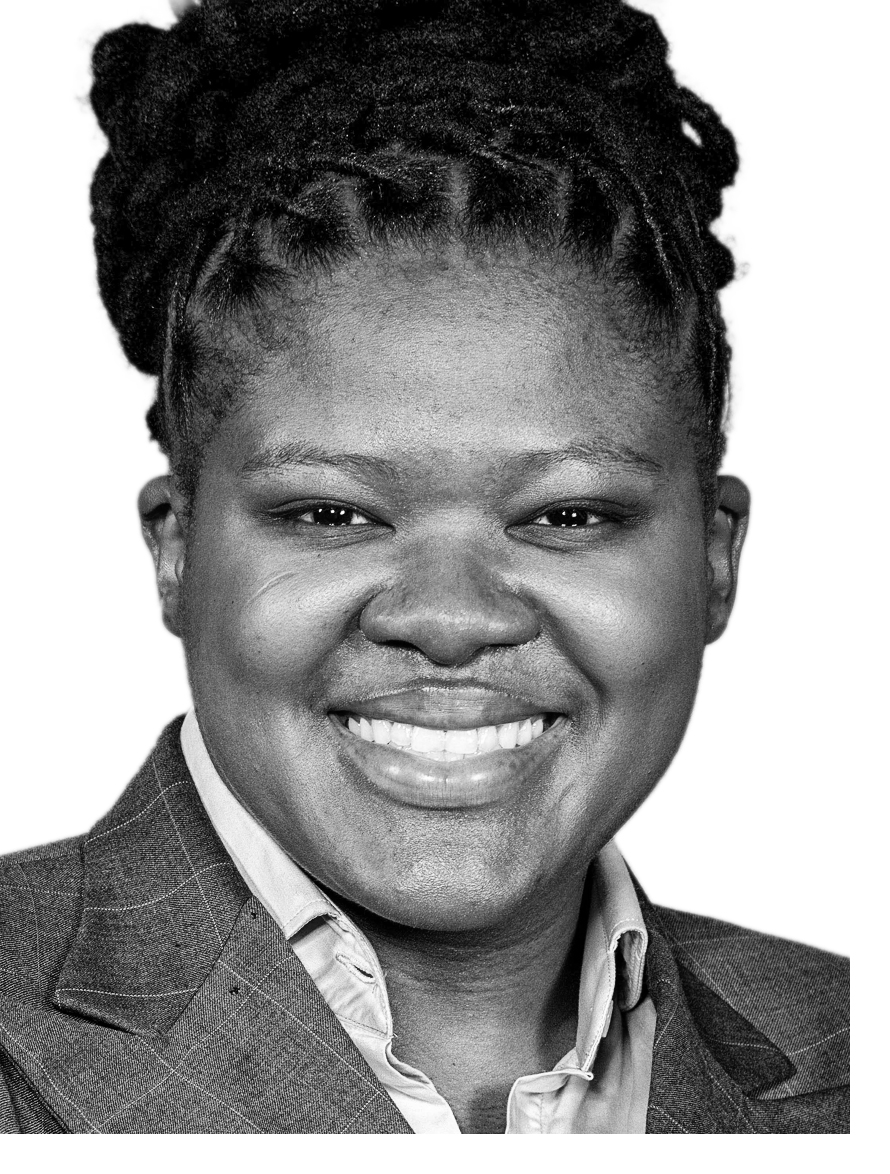
Speech by Deputy Minister in The Presidency Nonceba Mhlauli (MP) at the National Council of Provinces Debate on International Women’s Day
Theme: “Recentering Social Justice and Human Rights for Women and Girls”
Chairperson of the National Council of Provinces, Hon Refilwe Mtshweni-Tsipane
Deputy Chairperson of the NCOP, Hon Les Governder
Chief Whip of the National Council of Provinces, Hon Kenneth Mmolemang
Presiding Officers
Honourable Members of the NCOP and provincial delegates present,
Let me start by passing our sincere condolences to the family, friends, comrades and former colleagues of our first chairperson of the NCOP, Mosiuoa lekota. We cannot speak of the South African democracy and the work of this multi-party Parliament without paying tribute to his selfless contribution. We thank him for his unwavering service to the people of South Africa. May his revolutionary soul rest in peace.
Honourable Members,
International Women’s Day was first observed in the early twentieth century. It was not born in ceremony, but born in struggle. It emerged from the marches of garment workers, the defiance campaigns, and the collective refusal by women across the world to accept their own erasure.
Over a century later, we gather in Parliaments, in community halls and in the streets not only to celebrate how far women have come, but to confront, with honesty, how far the world still must go.
The theme before us today, “Recentering social justice and human rights for women and girls,” is not a slogan. It is a diagnosis. It is an acknowledgement that the centre shifted. That progress, where it came, was uneven. That rights, where they were won, were not always protected. And that justice remains, for too many women and girls, a promise still deferred.
To recenter is to return, but it is also to interrogate. We must ask what displaced women and girls from the centre of our social justice agenda in the first place. The answer demands honesty.
It was the persistence of patriarchal systems that treat women’s rights as a concession rather than a constitutional imperative. It was the normalisation of violence as a private matter rather than a public emergency. It was the quiet tolerance of economic exclusion, the unpaid care burden, and the glass ceilings that keep women on the margins of opportunity and power.
Honourable Members,
Yes, policy and legal frameworks exist. They are in place through the Convention on the Elimination of All Forms of Discrimination Against Women (CEDAW), adopted in 1979 by the UN General Assembly, the Beijing Platform for Action, the AU Agenda 2063 and our own South African Constitution. What has wavered is not the law, but the political will to enforce it, to fund it, and to live by it.
The real test is not how well we can recite these conventions but whether a woman can walk home safely. Whether a survivor can access justice without being retraumatised. Whether a girl child can learn without fear. Whether a woman-owned enterprise can access markets, finance, and procurement without being blocked by old networks and gatekeeping.
Thirty years on, as the world marks Beijing+30, we are compelled to take stock with honesty. Progress has been made: maternal mortality has declined, girls’ enrolment in schools has improved, and women’s representation in legislatures has grown. But the progress is fragile, uneven, and in many parts of the world, it is reversing.
In fact, it would be amiss of me not to mention what a devastating time it has been for women in Sudan, The Democratic Republic of Congo, in Palestine and most recently the Middle East as well as in other regions of the world plagued by conflict.
In these theatres of war and political upheaval, it is women and girls who bear the heaviest burden. They are displaced from their homes, stripped of access to education and healthcare, subjected to violence, and denied even the most basic forms of dignity. Conflict does not only destroy infrastructure. It erodes the social fabric that protects women. It turns their bodies into battlegrounds and their rights into collateral damage.
We must be unequivocal in our call for peace. Peace is not an abstract diplomatic ideal. It is the foundation upon which women are able to live safely, to participate economically, to raise families without fear, and to contribute meaningfully to society. Where there is no peace, there can be no justice for women. Where there is no stability, empowerment becomes an empty promise.
We therefore reiterates its principled position in support of peaceful resolution of conflicts, dialogue over destruction, and the protection of civilians, particularly women and children. We affirm that the empowerment of women must extend to every sphere of life political, social, and economic. Women must not only survive conflict; they must be included in peacebuilding, reconstruction, and governance processes. Sustainable peace is only possible when women are present at negotiation tables and in leadership structures shaping the future.Honorable Members
In South Africa, International Women’s Day carries a particular weight and a particular promise. We placed gender equality at the heart of our democratic project as a founding principle. Our Constitution guarantees equality without qualification. Yet we remain confronted by the brutal reality of gender-based violence and femicide, the feminisation of poverty, and structural barriers that still deny dignity and opportunity to millions of women, particularly in rural and peri-urban communities.
Deputy Chairperson,
If we are serious about recentring social justice, then we must be equally serious about re-centering implementation. That is why the work of the Department of Women, Youth and Persons with Disabilities which we are presenting here today is not peripheral. It is structural. Its mandate is to drive mainstreaming, advocacy, monitoring and evaluation across government, so that women’s rights are not treated as a side programme, but as a standard in every plan, every budget, and every delivery outcome.
This is also why our focus must be practical and measurable: focusing on prevention, protection, justice, and economic power.
First, on safety and justice. South Africa has built key parts of the survivor-support ecosystem, but access remains uneven and the system remains too slow for the urgency of the crisis. The Department of Justice’s Gender-Based Violence page makes it plain that survivor support includes the Gender-Based Violence Command Centre, a 24-hour call centre that can refer cases directly to SAPS and deploy social workers, including accessible channels for persons with disabilities.
What matters now is scale, coordination and consequence. In April 2025, the Justice, Crime Prevention and Security Cluster convened an urgent special sitting in response to escalating GBVF, and adopted a 90-day acceleration programme to fast-track implementation of the National Strategic Plan on GBVF. That intervention is not only a statement. It includes concrete measures: revitalising and reconstituting the Inter-Ministerial Committee on GBVF under the 7th Administration, establishing a dedicated GBVF Priority Committee within NATJOINTS, revitalising provincial JCPS structures, integrating GBVF statistics across the value chain from arrest to incarceration, and accelerating the rollout of Thuthuzela Care Centres across all provinces.
Honourable Members, this is what “recentering justice” looks like in practice: a criminal justice value chain that is aligned, time-bound, measurable, and survivor-centred.
And in November 2025, the National Disaster Management Centre took a further step by classifying Gender-Based Violence and Femicide as a national disaster in terms of the Disaster Management Act. This classification is a profound acknowledgement that GBVF is not only a social crisis. It is a national emergency that demands coordinated response, mobilisation of resources, and accountability at every sphere of government.
Second, on economic justice. A society cannot claim to advance women’s rights while women remain locked out of productive assets, procurement, and finance. South Africa has placed a clear stake in the ground through policies and programmes that target women’s economic inclusion. The State of the Nation 2026 address reflects that government has put a national policy in place to ensure that 40% of public procurement goes to women-owned businesses, and that thousands of women-owned enterprises have been trained to participate in procurement opportunities. It further notes that the IDC has earmarked significant funding to invest in women-led businesses, alongside commitments by other entities to support women-owned enterprises.
This matters because procurement is not a technical matter. It is a redistribution instrument. It is a lever for inclusion. It is the difference between women being beneficiaries and women being builders of the economy.
The Presidential Youth Employment Intervention (PYEI) which is multi-stakeholder programme dedicated at accelerating empowerment and development opportunities for young people. By the third quarter of the 2025/26 financial year, the PYEI facilitated nearly 295,000 earning opportunities for youth, most of which went to young women in particular.
What we must do is upscale these efforts to ensure that women, particular young people are empowered in such a way that they do not fall prey to social ills which sets them up for a life of poverty and destitution. For us to do that honourable members, we must ALL be concerned with the status of women in our society.
Deputy Chairperson,
This is where the National Council of Provinces has a decisive role. Recentring social justice is not achieved only through national declarations. It is achieved where people live. It is achieved through provincial implementation, local coordination, and budget alignment.
The NCOP must therefore use its constitutional mandate to ensure that provincial departments and municipalities do not treat women’s rights as an unfunded mandate. Oversight must ask direct questions: Are shelters funded and functional? Are police stations equipped to respond with dignity and speed? Are courts safe for survivors and witnesses, especially children? Are provinces participating in integrated GBVF reporting and case-flow management as required by the JCPS acceleration programme? Are procurement opportunities reaching women-owned enterprises outside major metros?
Honourable Members,
We must also speak plainly about the role of men and boys. We cannot build a future without confronting the socialisation that produces violence, entitlement and control. The justice system itself acknowledges programmes that focus on positively changing the attitudes of men and boys in areas with high levels of violence against women. This is not optional work. It is prevention.
To the boy child, we must say: your strength is not dominance. It is discipline. It is respect. It is accountability. It is the courage to reject peer pressure, to reject violence, and to protect the dignity of women and girls in your home, your school, your community, and online.
To fathers, brothers, coaches, faith leaders, traditional leaders and community leaders, we must say: silence is not neutrality. Silence is permission. If we are serious about ending GBVF, then positive masculinity must become a societal norm, not a campaign for 16 days.
Chairperson,
Our G20 Presidency last year provided an opportunity to elevate women’s empowerment in ways that are practical and globally relevant. The G20 Empowerment of Women Working Group Chairperson’s Statement of 31 October 2025 places the care economy and financial inclusion at the centre of women’s empowerment, and recognises the importance of shared social responsibility for caregiving, including encouraging the active engagement of men and boys in care work. It also frames women’s financial inclusion as a fundamental enabler of women’s economic empowerment and inclusive development.
This is deeply aligned with our domestic reality: women carry disproportionate unpaid care burdens, and that burden is an economic constraint. If we want women to participate equally in the economy, we must invest in care infrastructure, remove barriers to women’s access to finance, and recognise that economic justice is a form of violence prevention.
Honourable Members,
This year also carries profound historical meaning. In 2026, we mark 70 years since the women’s march of 9 August 1956, when thousands of women, mothers, workers, organisers, and leaders marched to the Union Buildings to declare that they would not accept injustice. Their message is not only history. It is instruction. It tells us that courage is collective, and that rights are defended through action.
As we look to the year ahead, the call of this debate must be clear:
We must move from commemoration to implementation.
From promises to measurable outcomes.
From policy intent to lived reality.
We must strengthen access to justice, not only by improving laws, but by fixing the system: faster case processing, safer courts, better survivor support, integrated data, and accountable consequences for perpetrators.
We must strengthen economic justice, not only by speaking about empowerment, but by opening procurement, expanding finance, building capability, and ensuring that women-owned enterprises can compete and win.
We must strengthen prevention, not only by protecting women and girls, but by actively shaping the values of boys and men, and rebuilding communities that refuse violence as normal.
And we must do so together: national government, provinces, municipalities, civil society, business, labour, communities and households.
When South Africa says we are “recentering social justice and human rights for women and girls,” we are making a declaration about the kind of country we choose to be. A country where safety is not luck. Where justice is not delayed. Where economic participation is not gatekept. Where dignity is not negotiable.
Let this House, and the society we represent, leave this debate with one shared commitment: that justice for women and girls will no longer be a deferred promise, but a lived reality.
I thank you.
.png)

.png)

