


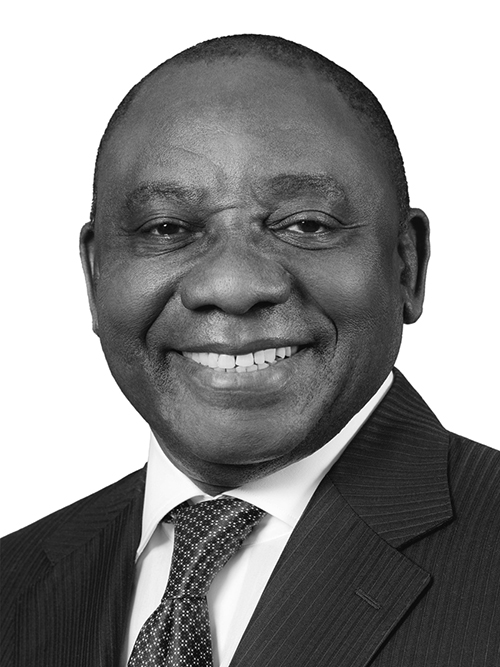
Remarks by His Excellency President Cyril Ramaphosa during the India - South Africa Business Leadership Roundtable, 18th BRICS Leaders' Summit, New Delhi, India
Deputy Minister of Trade, Industry and Competition in South Africa, Mr Zuko Godlimpi,
Director General of the Confederation of Indian Industry, Mr Chandrajit Banerjee,
Business Leaders,
Members of the Diplomatic Corps,
Ladies and gentlemen,
Good morning and a very warm welcome to this engagement that seeks to strengthen economic ties between India and South Africa.
We are meeting at a time when the global economy is undergoing a significant transformation.
Supply chains are being reconfigured, industrial policies are being reshaped and the energy transition is accelerating.
Digital technologies are reshaping industries and emerging markets are driving global growth.
To thrive amidst this rapid change requires partnership and shared ambition.
India is powering ahead and South Africa is open for business.
South Africa is transforming its economy, undertaking far-reaching changes in our energy, telecommunications, logistics and water sectors.
We have emerged from more than a decade of electricity shortages into a new era of investment and competition.
We are reviving our freight rail system and our ports, enabling the participation of new operators and investing in expanding capacity.
These reforms are focused on reducing the cost of doing business and making our economy more competitive.
We have embarked on the largest infrastructure investment programme in our country’s history, building the capacity of our economy while meeting the needs of our people.
Due to the measures we have taken, the country’s credit rating outlook has improved, inflation has been on a downwards trend and we are on the path to stabilising national debt.
Our investment drive continues to gather pace.
That is why we are delighted that more than 150 Indian companies have collectively invested over $10 billion in South Africa, creating employment for over 18,000 South Africans.
At the same time, a number of leading South African companies have invested in India’s growth.
These include companies such as Naspers, FirstRand Bank, Sanlam and Momentum.
Today, we have an opportunity to build on the relationship through a focus on investment, trade, exports, innovation, industrial development and sustainable growth.
This forum provides the private sector with an opportunity to transform policy dialogue into commercially viable projects and long term partnerships.
There are a few areas where collaboration between our countries holds immense promise.
The first of these areas is in energy transition and green industrialisation.
India and South Africa are both navigating ambitious energy transitions.
Opportunities exist in renewable energy technologies, green hydrogen, critical minerals, battery value chains and sustainable manufacturing.
Companies like Vedanta have already established a footprint in the country.
We believe that other large companies can anchor their investments in South Africa and use it as a base to export into Africa and the rest of the world.
The second area is in mining, critical minerals and beneficiation.
South Africa’s mineral wealth and India’s manufacturing capabilities create the basis for cooperation across critical mineral value chains.
We are committed to the beneficiation of minerals where they are extracted.
There is great potential to partner on the production of new energy vehicles, batteries and other products that draw on our respective capabilities.
The third area of collaboration is infrastructure and connectivity.
Investment in transport, logistics, ports, digital connectivity, smart cities, and industrial corridors is essential to trade and integration on the African continent.
Enhanced infrastructure enables businesses to access new markets and participate more effectively in regional and global value chains.
Last month, South Africa hosted the Sustainable Infrastructure Development Symposium, where we reiterated the importance of reliable energy, adequate water, efficient transport systems and digital connectivity.
South Africa has identified 195 strategic integrated projects across priority industries worth more than $100 billion.
To support this infrastructure drive, we are investing in project preparation to ensure that all these plans translate into roads, rail corridors, renewable energy plants, transmission lines, water treatment plants and hospitals.
We have produced our third Construction Book, which provides a national overview of funded projects that are expected to be issued for tender in the next 18 months.
We encourage Indian companies to consider partnerships to participate in these.
The fourth area with great potential is agriculture.
Agriculture is fundamental to economic development and social stability.
There is great opportunity for collaboration in agro-processing, agricultural technology, food innovation and sustainable farming practices.
This would contribute to stronger supply chains, improved productivity and greater food security in both India and South Africa.
The fifth area of collaboration is in the digital economy and innovation.
The rapid growth of the digital economy presents exciting opportunities for cooperation in fintech, digital trade, artificial intelligence, innovation ecosystems, cybersecurity and digital skills development.
Working together, we can harness technology to drive inclusive growth and competitiveness.
We have already seen this in action.
Just a few weeks ago, Atain – a global business services company headquartered in India – opened a new site in Cape Town that will see it increase its local workforce from 1,500 to over 2,000 young South Africans.
The final area of cooperation that we wish to highlight is in human capital and institutional partnerships.
Sustained growth and commercial success depend on investing in people.
We should strengthen partnerships between universities, research institutions, skills development organisations and businesses.
This will support innovation and knowledge sharing and develop workforces that are ready for the future.
The strength of the partnership between our countries is not measured by the agreements we sign but by the impact we achieve.
By working together, we can draw on our complementary resources and capabilities to create shared value.
We can empower our youth and uplift our communities.
And we can enable a thriving trade between our countries and across our respective regions.
The outcomes of this forum must be anchored in actionable commitments supported by both government facilitation and private sector leadership.
We are ready for a new era in economic relations between our two countries.
We are ready for an era in which business engagements like this lead to trade and investment, where we move from contact to contracts.
I thank you.
.png)

.png)

