





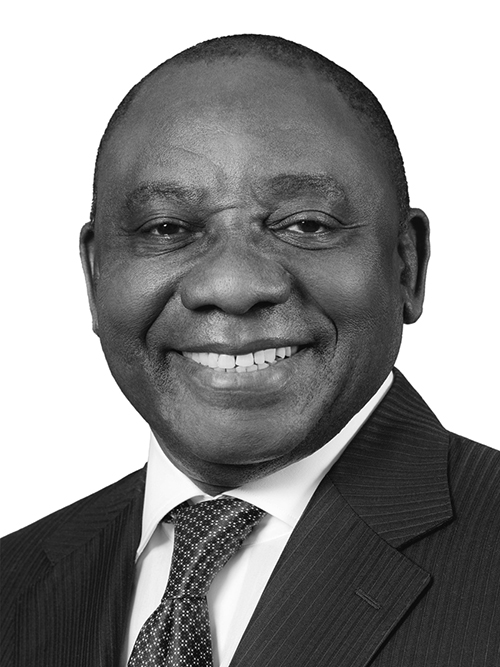
Keynote address by President Cyril Ramaphosa at the 2026 National Local Economic Development Summit, Birchwood Conference Centre, Ekurhuleni
Programme Director,
Minister of Small Business Development, Ms Stella Ndabeni,
Minister of Cooperative Governance and Traditional Affairs, Mr Velenkosini Hlabisa,
Acting Premier of Gauteng, Ms Nomantu Nkomo-Ralehoko,
Ministers and Deputy Ministers,
MECs,
President of the South African Local Government Association, Cllr Bheke Stofile,
Chairperson of the National House of Traditional and Khoisan Leaders, Kgosi Thabo Seatlholo,
Executive Mayors, Councillors and local economic development practitioners,
Representatives of development finance institutions,
Representatives of business, academia and civil society,
Representatives of the SMME sector,
Officials,
Guests,
Ladies and gentlemen,
It is a great pleasure to attend this crucial summit on re-engineering local economies with small business growth at the centre.
This summit is taking place two weeks after we held a successful sixth South Africa Investment Conference, where we were able to showcase the many opportunities for investment in our country.
The conference secured a record R890 billion in investment pledges across all provinces.
When investors build their business in our country, they don’t set up factories or open call centres on the lawns of the Union Buildings or in front of the Houses of Parliament.
This investment takes place in metros, cities, towns and villages.
Just as local government is the engine room of development, metro, district and local municipalities must see themselves as incubators of economic activity.
When an entrepreneurship culture is strong and supported in cities and towns, it contributes to job creation and small business development.
South Africa has a burgeoning entrepreneurial sector that continues to increase its contribution to economic activity and job creation.
Yet the entrepreneurship ecosystem as a whole still faces challenges with funding, skills training, bureaucratic barriers and integration into larger value chains.
It also faces challenges within local government that constrain economic opportunity and potential.
The Auditor-General’s report on local government highlights persistent weaknesses that directly undermine service delivery and constrain local economic development.
These include weak financial management and revenue collection, failure to maintain infrastructure, ineffective supply chain management, irregular and wasteful expenditure and weak consequence management.
These challenges translate into unreliable electricity, water insecurity, poor roads, poor service delivery and unsafe trading environments.
Without fixing governance, we cannot fix service delivery and without fixing service delivery, we cannot unlock local economic development.
The task of this summit is to shift the discussion from the problems to the solutions.
As my contribution to the deliberations of the summit, there are four sets of actions that I would like to put forward.
The first of these is to unblock service delivery constraints at local government level, especially with regards to basic infrastructure.
Energy security, water provision, roads and rail lines are the foundation of growth.
We have made much progress in tackling load shedding and improving the efficiency of our logistics sector.
This summit must now translate national progress into local success.
Municipalities must be the frontline in unblocking infrastructure constraints, ensuring that the local industrial park has the power it needs, that tourists can enjoy clean and safe beaches, and that township businesses have streetlighting to trade safely beyond daylight hours.
It is a major concern that we have not adequately prioritised infrastructure maintenance.
National Treasury Guidelines require municipalities to budget 8 percent of the carrying value of property, plant and equipment.
Many municipalities are budgeting less than 1 percent.
To correct this, we need to improve debt collection and revenue management systems. We need to leverage private investment for infrastructure.
The second set of actions I would like to see emerge from this summit revolve around the ease of doing business.
Cutting red tape is crucial both to attract large scale investments and also to enable informal traders and small township entrepreneurs to succeed.
Some of our cities and municipalities have done well in improving the ease of doing business.
They have systems and targets for zoning approvals, issuing construction permits, connecting businesses with water and electricity, issuing trading and business licenses, including using e-registration systems. There is regulatory certainty.
However I worry that these municipalities are the exception rather than the rule.
More often than not, bureaucratic delays at municipal level prevent local investments from getting over the line.
There are backlogs in issuing business licenses, which, among other things, prevent micro enterprises accessing government support.
This must change.
As we finalise the Business Licencing Bill and roll-out the Red Tape Reduction Framework, we call on local government to drive its own red-tape reduction reforms.
We would also like to see continuous engagement with local business associations and forums, so that we may understand their frustrations and address their concerns.
Investment will always gravitate towards municipalities that make it easy to do business.
The third set of actions I would propose focus on what could be called the Operating System of Growth.
For too long, local economic development has been treated as an isolated municipal project function.
But economic growth is an outcome of a functioning operating system.
Our municipalities contribute most effectively to growth not through isolated grants or projects, but through reliable basic services and predictable infrastructure maintenance.
They contribute through transparent and time-bound development approvals and effective urban management.
Municipalities contribute to growth by using procurement and ensuring supplier payment discipline to support local small businesses.
This summit seeks to reposition the municipal contribution to growth as an operating system outcome, not a project function.
To achieve this, we are formalising the District Development Model’s One Plan as a binding economic transformation compact.
These compacts will be implemented through specific Area Compacts targeting priority nodes and corridors with sequenced investment in transport, bulk services, and enabling business infrastructure.
These DDM One Plans need to clearly articulate local growth drivers and how these can be supported, aligned to our country’s broader industrial policy.
Functional economic regions do not stop at municipal boundaries.
We need to shift from competition between neighbours to structured regional economic partnerships.
These will align the planning pipelines of state-owned companies and national departments with local priorities.
These regional economic partnerships must consider how small enterprise, township and village economies can be better integrated into markets and value chains.
This must include the broader African market, which we are unlocking through the African Continental Free Trade Area.
We need to build regional eco-systems where government, universities, incubators, traditional leaders and the private sector all work together to unlock local growth drivers.
The fourth and final set of actions that I suggest be reflected in the summit outcomes deal with the critical question of capacity.
Specifically, how do we equip local government and communities to fully realise these coordinated plans?
The answer lies in professionalising our municipalities and ensuring that our governance structures are capable, accountable and inclusive.
We must professionalise the local economic development function.
Appointments must be made based on merit, relevant skills, experience and qualifications, while holding people to strong ethical standards.
The scale of the challenge before us requires a national compact for Local Economic Development.
All stakeholders have a role to play.
For state-owned entities, this means that their infrastructure investments must drive local economic participation. When infrastructure is built, we must see local suppliers, local contractors and local jobs.
Our development finance institutions must help to de-risk municipal infrastructure and develop blended finance solutions that turn plans into bankable projects, and projects into delivery.
We need a stronger compact with the financial sector to expand MSME financing, especially in townships and rural areas.
We call on established businesses to partner with municipalities, develop local suppliers, invest in skills and open value chains.
We must leave this summit with a programme of action that binds us to clear deliverables and timelines.
We must ensure that the collaborative blueprint we draft here over the next two days contributes to a new reality for every South African, for every business, in every municipality, in every corner of our land.
South Africa is a country of entrepreneurs.
Our task is to unleash their potential and, in so doing, to build an inclusive economy that creates opportunities for all.
I thank you.
.png)

.png)

